GREATER RESPONSIBILITY AND PENALTIES FOR NON-COMPLIANCE SOON TO COME
 Considering the importance of occupational health and safety (OHS) in the workplace, there has been a growing need and demand for updates and developments to ensure that existing procedures are in line with global best practices.
According to Health and Safety Practitioner Viann Nel of Afroteq Advisory, the recent Covid-19 pandemic has necessitated OHS in the workplace to be re-evaluated and critically assessed. “The pandemic brought health and safety sharply into focus. It emphasised the importance of OHS on the corporate agenda and encouraged workplaces to become more aware of their safety procedures,” Nel says.
“It has become abundantly clear that the OHS Act in its current format needs an update given how quickly the corporate environment is developing and changing. Every aspect of every operation should be designed to increase safety. Getting companies to meet the bare minimum requirements is no longer good enough. I believe the revised legislation will be a major step forward by shifting current policies and procedures from a theoretical perspective to a practical, proactive approach,” he explains.
Although it is not expected that the new OHS Act will be promulgated before the end of the year, the Department of Employment and Labour has directed all health and safety practitioners to ensure the proposed changes are put into practice by treating the Act’s developments as though they had already been implemented. Close to a thousand inspectors have been recruited to travel to enterprises randomly in order to assess their work environments for health and safety precautions, issuing fines where necessary.
While many businesses have a few, basic OHS policies and procedures in place, these protocols might no longer be sufficient. In light of this, the Department of Employment and Labour, working in collaboration with lawmakers and business professionals, have drafted an amendment to the OHS Act, which is currently out for public comments.
 The new strategies will be more descriptive in response to a thorough workplace risk assessment – making the health and safety protocols easier to implement and having more clearly defined parameters. This is in contrast to the historically generic form of risk management strategies. Policies, procedures, and updated training programmes that are specifically created to meet the demands of a given workplace will need to be in place as part of specialised risk mitigation strategies,” Nel expands.
One thing is certain: the amended OHS Act is going to place a greater responsibility than ever before on employers to ensure the safety and well-being of their employees. On the other hand, it will also demand a greater awareness amongst employees, as they will be expected to adhere to the organisation’s risk management plan with acute focus – taking it as the law and no longer a mere suggestion. They will be expected to play an active role in implementing and adhering to policies and procedures in the workplace and will be held responsible for identifying potential exposure to the workplace environment. However, it can be expected that it will also lead to increased awareness, improved competencies, and greater responsibility on the part of employees.
“Every organisation, regardless of its size, will be expected to have a risk management plan in place directly aligned with the hazards and risks identified by implementing suitable and related systems, documents, checklists, and templates.”
With Health and Safety Management systems now being specific to each workspace, health and safety-related training, instructions, and supervision that employees receive must be more precise and aligned with their immediate risk exposures in their particular workspace. Senior management must ensure that the individuals they employ do not perform any duties that lie beyond the scope of the implemented Risk Management Plan or beyond the scope of what has been deemed safe in the organisation.
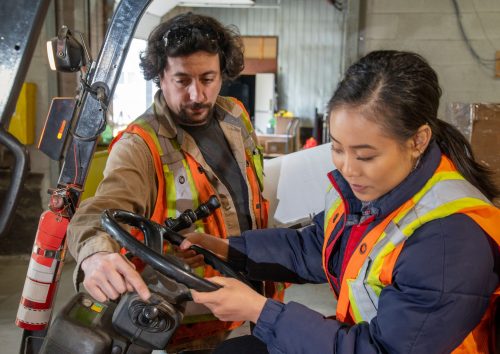 Concludes Nel: “A detailed Risk Management Plan will need to be developed for both permanent and non-permanent staff members within the organisation. The onset of the Covid-19 pandemic has resulted in an exponential rise in the number of people who now work from home. Companies are therefore now also expected to make provision for these employees from an OHS perspective with regards to their health, safety and the way they interact with technology (ergonomics). Afroteq Advisory is ready and available to assist our clients with developing and implementing their tailor-made Workplace Specific Risk Assessment and Risk Management Plan, while our sister company Afroteq Academy offers a range of unit standard aligned compliance and OHS training offered in a facilitated and online format to assist companies and their staff to understand, develop, implement and manage OHS in their specific workplace”.
For more information, please contact Viann Nel at VNel@Afroteq.co.za or 010 595 3101. Alternatively,visit www.afroteq.co.za
More information on training can be found on www.afroteqacademy.co.za or email Afroteq Academy on info@afroteqacademy.co.za to learn more about their programme offerings.
Related

South Africa's retail landscape is in the midst of a structural reset. Macroeconomic pressures, rapid technological advancements and radical changes in consumer behaviour. Traditional physical, in-store retail categories, long driven [...]

THE BACKBONE OF SMARTER ASSET MANAGEMENT Condition assessments are one of the cornerstones of asset management. The knowledge of the actual condition of assets is important to operate in [...]